

Quick answer
Yes, there are glaciers in Iceland—the island nation hosts several major ice caps covering approximately 11,000 square kilometers. Langjökull Glacier in the Highlands is Iceland's second-largest ice cap and one of the most accessible for visitor activities. The glacier is open year-round with free entry to the ice cap itself, though guided tours are required for snowmobiling, ice tunnel visits, and safe exploration of the glacier surface.
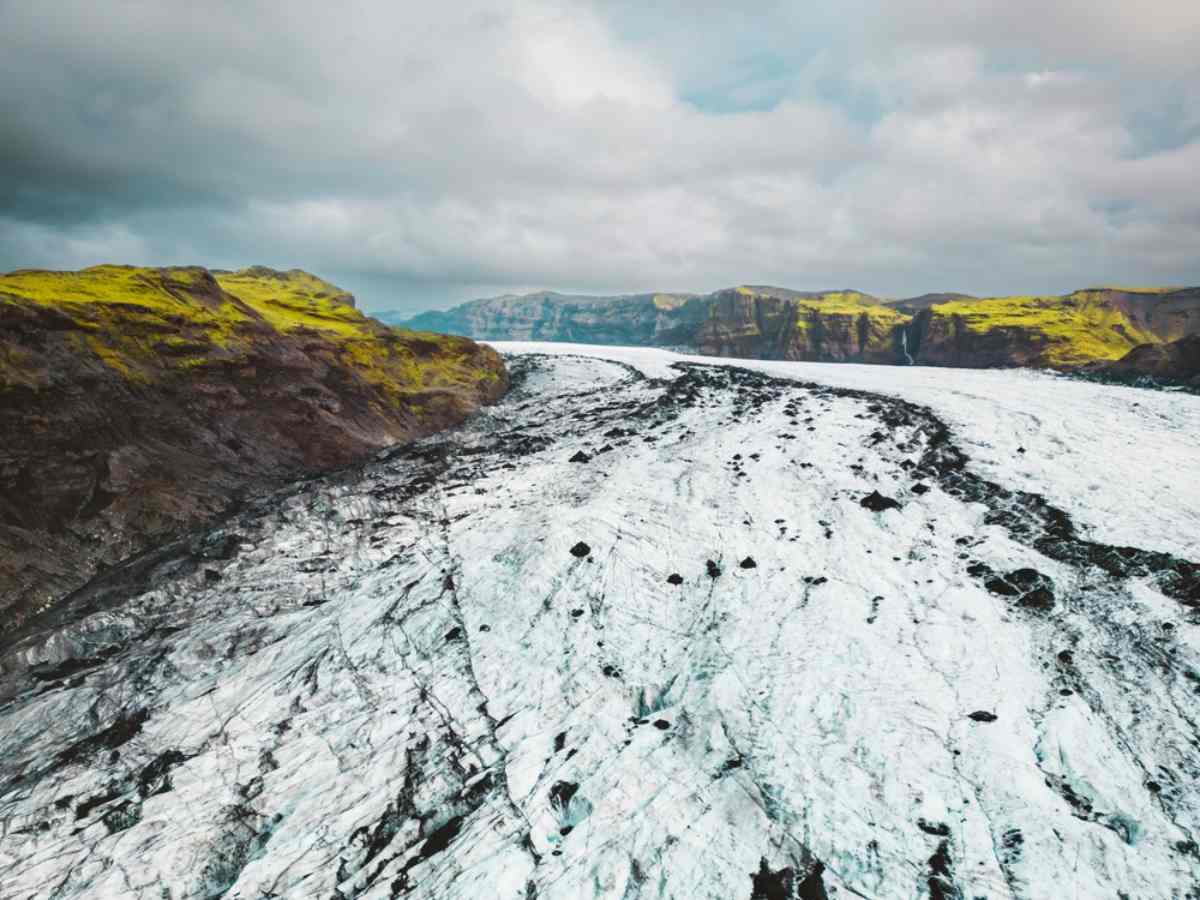
Langjökull stretches across 953 square kilometers of Iceland's interior plateau, forming a frozen expanse visible from Reykjavik on clear days. The ice cap feeds several rivers and sits between two active volcanic systems, a geological pairing that defines much of Iceland's interior landscape. Visitors approaching from the south trace gravel tracks through lava fields and tundra before the white mass of Langjökull dominates the horizon. Iceland's glaciers exist because of the island's high latitude and maritime climate—persistent snowfall accumulates faster than summer melt can remove it. Langjökull reaches depths of 580 meters in places, its ice formed over centuries of compacted snow. The glacier recedes measurably each year, a process accelerated since the late twentieth century, making current access opportunities time-sensitive in geological terms. The ice cap remains accessible throughout the year, though conditions vary sharply by season. Winter months bring stable snowpack ideal for snowmobiling across the glacier's plateau, while summer unveils meltwater channels and crevasse fields that require professional navigation. Most visitors arrive between late morning and early afternoon to maximize daylight and weather stability—Highlands weather shifts rapidly, and clouds can obscure the glacier within minutes. Tour operators based at the glacier's edge coordinate departures around these windows. Into the Glacier, a man-made ice tunnel system carved into Langjökull's western flank, offers the only way to walk inside a living ice cap in Europe. The tunnels extend 550 meters into the glacier, revealing blue ice formations and providing a controlled environment separate from surface conditions. Snowmobile tours crossing the glacier's upper plateau cover a different experience—open ice, distant mountain views, and the physical scale of the ice cap itself. Both require advance booking and specialized equipment provided by licensed operators, as independent glacier travel without training presents objective hazards even in summer.
“Langjökull reaches depths of 580 meters in places, its ice formed over centuries of compacted snow.”
When to Visit: Planning Your Trip for 'Are There Glaciers in Iceland'
The best arrival window for visiting Langjökull is 09:00–14:00. This timeframe provides optimal daylight and the necessary scheduling flexibility for glacier activities.
Summer (June–August)
High volumeMild; 5°C to 12°C
Long daylight hours allow for extended exploration of the glacier surface.
Winter (November–March)
ModerateCold; -10°C to 0°C
Expect limited daylight and potential road closures due to heavy snowfall.
Shoulder (April, May, Sept, Oct)
Low to moderateVariable; -2°C to 7°C
These months offer a balance between manageable weather and fewer visitors.
Verdict: The optimal time for your visit is mid-week between 09:00 and 14:00 during the shoulder months of April or October.
Opening Hours for When You Ask 'Are There Glaciers in Iceland'
Langjökull Glacier is accessible throughout the week, as the natural site remains open at all times. Please note that glacier activities and organized tours operate on their own specific schedules.
| Monday | 00:00–23:59 | |
|---|---|---|
| Tuesday | 00:00–23:59 | |
| Wednesday | 00:00–23:59 | |
| Thursday | 00:00–23:59 | |
| Friday | 00:00–23:59 | |
| Saturday | 00:00–23:59 | |
| Sunday | 00:00–23:59 |
Entrance Fees and Costs: Are There Glaciers in Iceland Worth the Visit?
Access to Langjökull Glacier is free of charge, as it is a natural site. Costs only arise when booking professional tours or ice tunnel activities.
While the glacier itself is free to visit, travelers typically pay for professional tours which vary in price depending on the activity provider.
Reaching the Ice: How to Get to Langjökull and Are There Glaciers in Iceland to Access?
Langjökull is located in the Highlands of Iceland and is primarily accessible via modified 4x4 vehicles. Travelers typically reach the glacier edge by joining organized tours from nearby hubs or driving to designated mountain road gateways.
Road 550 (Kaldidalur) from Húsafell
Road F35 (Kjölur) from the south or north
Transfer services from Reykjavik to Húsafell
Essential Preparation for Seeing Glaciers in Iceland
Glacier visits demand proper gear and advance booking due to weather and safety requirements.
-
Book your glacier tour in advance — Tours operate daily but require reservations through licensed operators like Into the Glacier.
-
Wear waterproof layers and insulated clothing — Temperatures on Langjökull drop below freezing year-round, even in summer.
-
Pack sturdy hiking boots with ankle support — Glacier surfaces are uneven and ice can be slippery despite crampons provided by tours.
-
Bring sunglasses and high-SPF sunscreen — UV reflection off ice and snow intensifies at altitude, causing burns even on overcast days.
-
Confirm tour departure times the day before — Weather conditions in the Highlands shift rapidly and operators may adjust schedules.
-
Carry snacks and water in a backpack — No facilities exist on the glacier itself and tours last 2-4 hours.
Check availability
Frequently Asked Questions: Are There Glaciers in Iceland
Everything you need to know about are there glaciers in iceland